LinkedIn
Open To Work
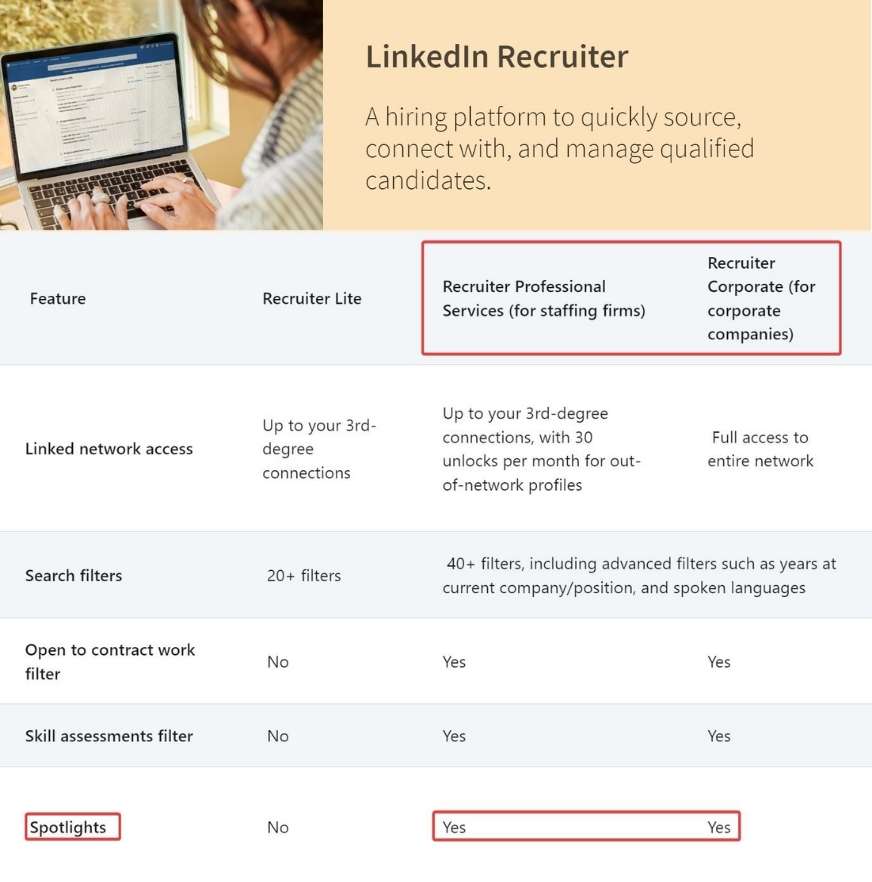
LinkedIn’s Spotlight highlights candidates who have indicated that they’re open to hearing from recruiters (Open-To-Work).
These candidates have opted to privately share their career interests with Recruiters and are interested in hearing about new opportunities.
*Spotlight is available in Recruiter RPS / Corporate licenses only. It is not possible to view Open-To-Work employees in your own company or see the Open-To-Work filter with the LinkedIn Recruiter Lite license.
Example
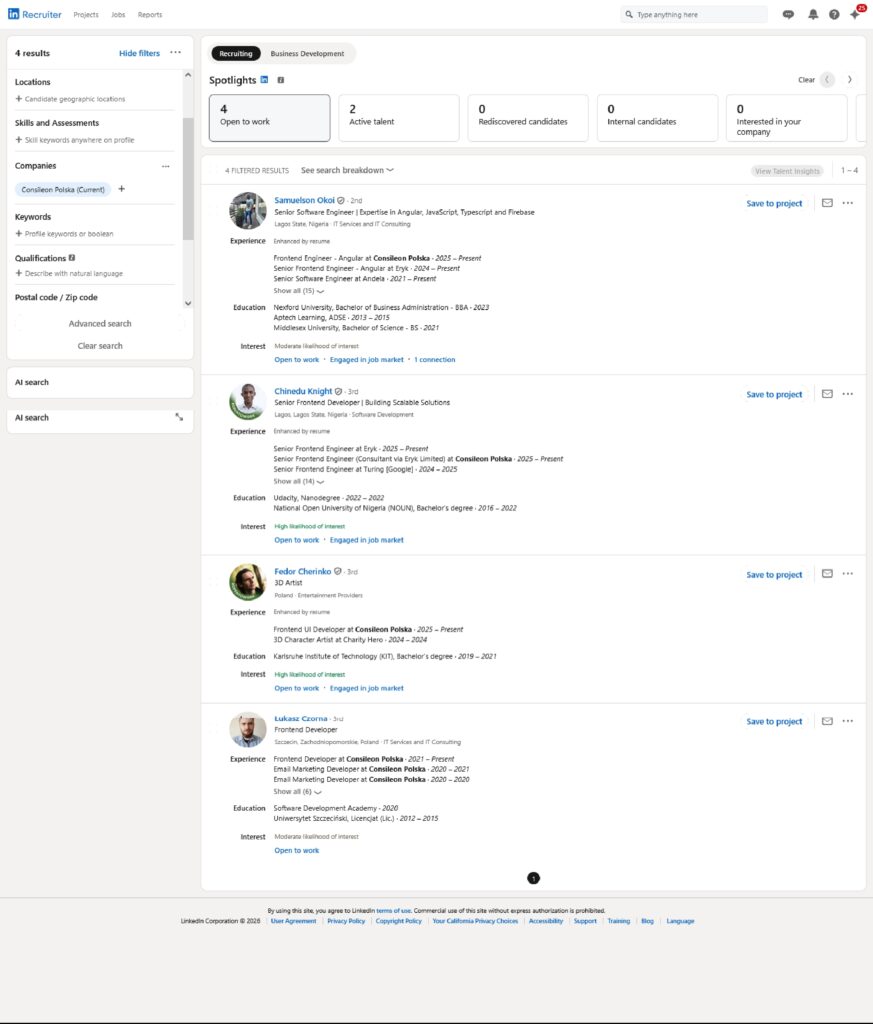
Below is a screenshot from the LinkedIn Recruiter RPS license of the company’s employees who declared themselves as Open-To-Work.
You can see 4 employees total, with 2 of them declaring their Open-To-Work status publicly with a green banner, as well as the ones who shared that information privately without the banner.
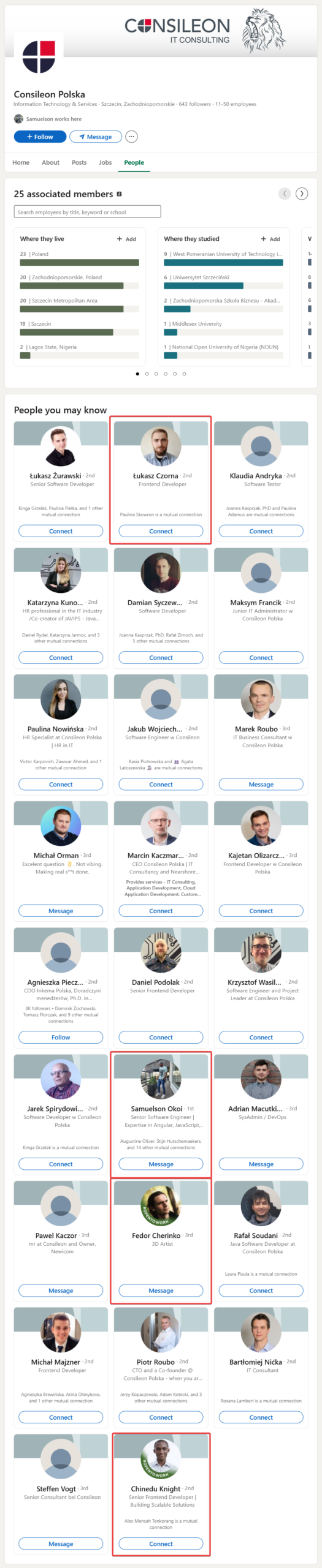
Below is a screenshot of the company’s public LinkedIn page and employee profiles, where we can clearly see the employees from the inside of the LinkedIn Recruiter RPS license and confirm that they are indeed working here.
Only candidates who have intentionally marked that they are looking for new opportunities on LinkedIn will be ever listed in LinkedIn Recruiter as “Open-To-Work”.
*I understand that for some Executives, who are receiving information from my side for the 1st time, hearing the number of employees willing to leave your company is extremely shocking – but there are no mistakes here. This is straight data from LinkedIn and from the people who work in your company.
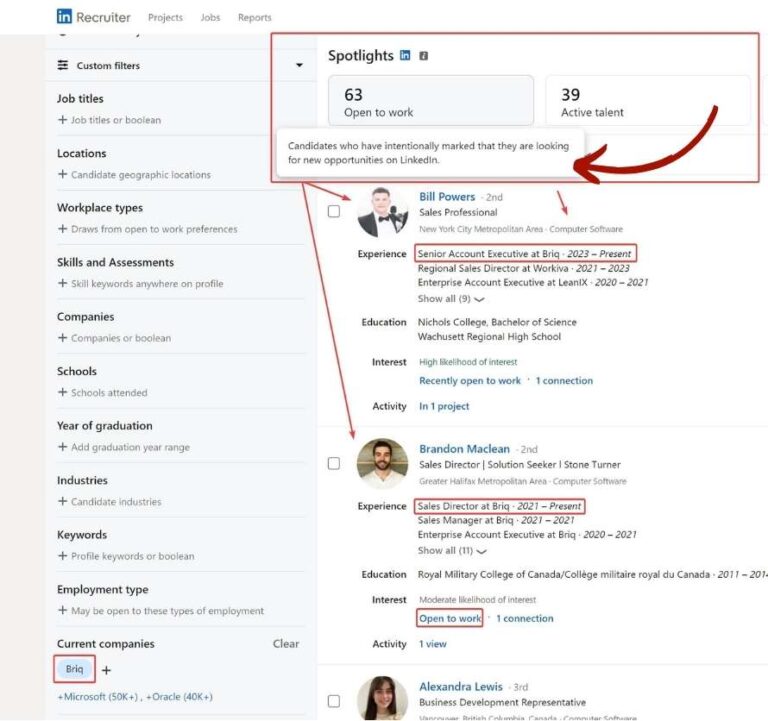
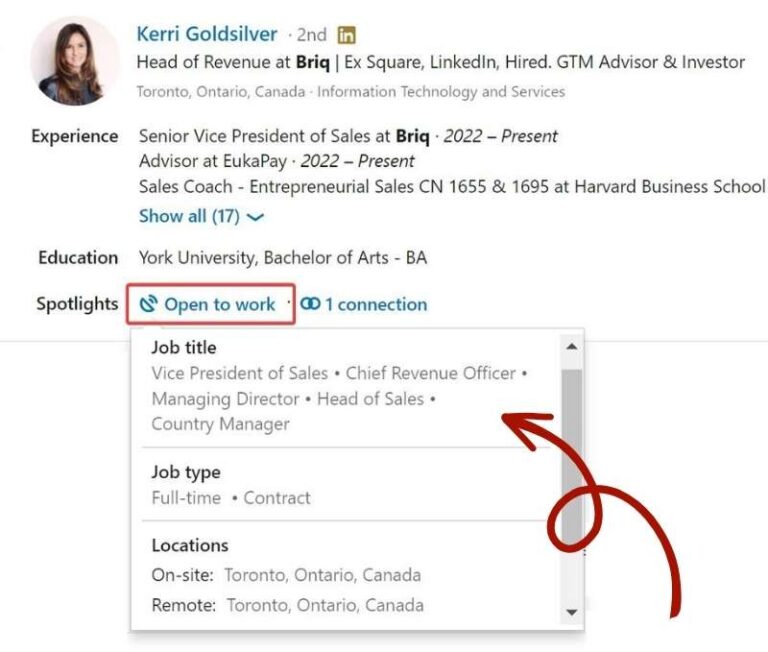
We can also see some details about what kind of position they are seeking, what type of job contracts, what locations, etc.
This can be a great indicator to figure out whether someone is looking for a job because they are seeking promotion, or (if they’re looking for the same position) that could mean that the compensation or job conditions in your company are not ideal.
As you see, not everyone is willing to publicly announce that they’re looking for a job with a green Open-To-Work banner.
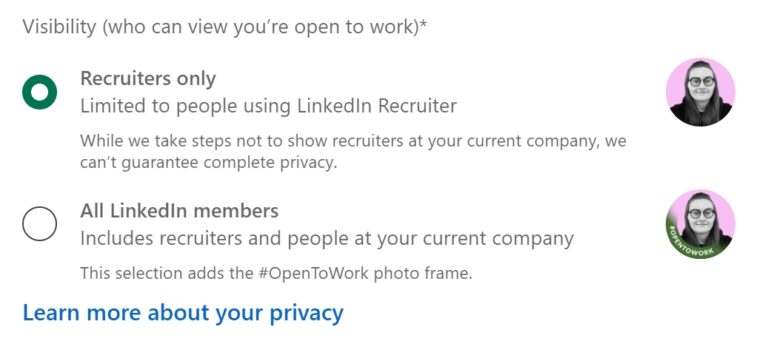
Every single candidate has a choice whether to show their Open-To-Work to all LinkedIn members with a green banner or just to recruiters only.
If they pick recruiters only, LinkedIn makes sure that only people with a proper LinkedIn license, who do not work for the current company, have access to such information.
The vast majority of people do not post the banner.
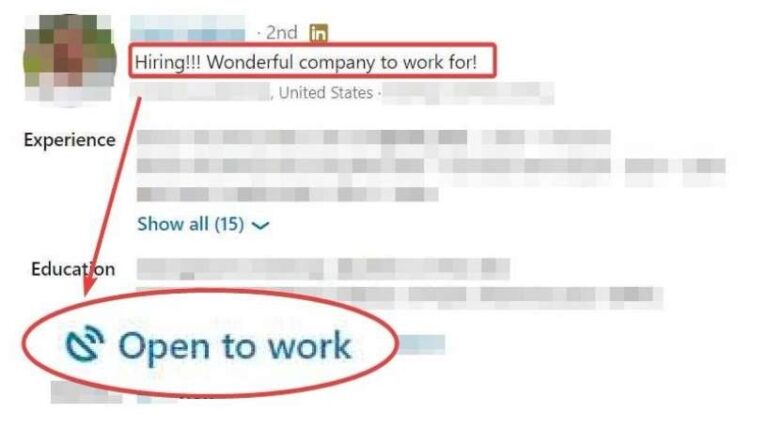
There are many reasons, why candidates do not want to share that they’re looking for a new job, mainly to avoid trouble in their current workplace, and comments like the one below.

The main point is – plenty of people who did NOT put the green “Open-To-Work” banner publicly actually want to leave your company.
*Based on my private data, coming from checking every single day various companies, it’s around 85%.
So if you have received my information about the number of people wanting to leave your company – it’s OK to be surprised; most of the companies are.
Every single day I get messages back from CEOs who thought that their company is in good standing, just to hear that approximately 20%-30%+ percent of their employees are actively looking for a way out, showing that the company is indeed NOT in as good standing, as they thought initially.
The only questions is…
What are you going to do?
The Society for Human Resource Management reports that replacing an employee who has left the company costs the company the equivalent of 6 to 9 months of their annual salary.
In a study conducted by the Center for American Progress, the cost of replacing a skilled employee can be as high as 213% of their annual salary.
These figures seem to be confirmed by the renowned American analytics company Gallup, which states:
“The cost of replacing a single employee can range from half to twice their annual salary—and these are conservative estimates.”
Considering that I mainly work with companies in IT & Technology sector, where every skilled employee is very well paid, with salaries exceeding $100,000, it is not difficult to see the huge potential financial losses that companies will face without a good plan to identify and retain employees who are already looking for another job.
Let’s look at an example of a former employee who left to join a competitor and see what financial losses Briq company incurred in the past to better visualize the scale of the problem…
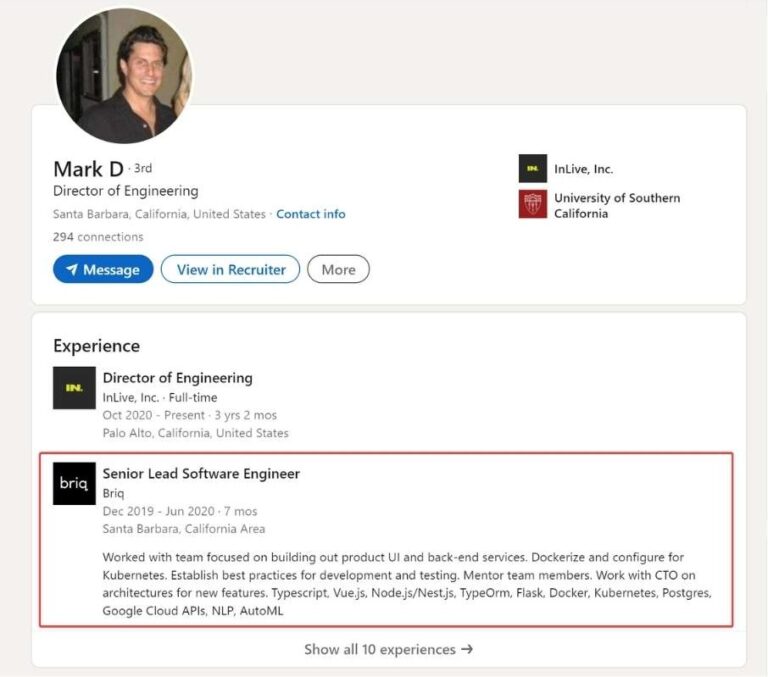
Salary reports provided by platforms such as Glassdoor are a good source of information about actual earnings in various positions – employees themselves anonymously provide information about salaries, benefits, etc.
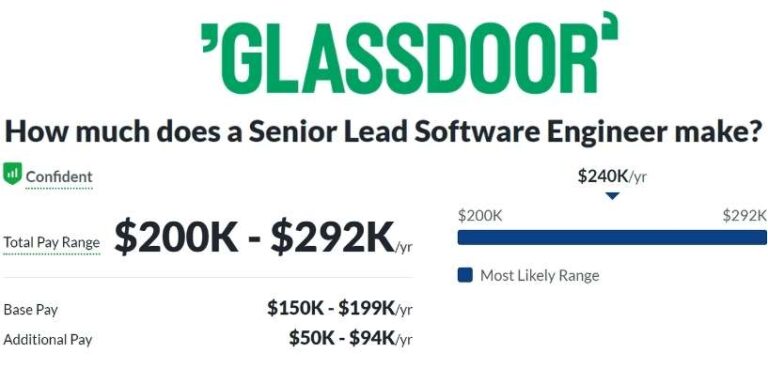
Conclusion: if an employee in this position and in this location earns an average of $240k, and the replacement costs are from 50% – 200%, then the financial losses in connection with the leave of this single employee are:

It is not difficult to see the level of potential financial losses for companies dealing with IT & Technology positions when multiple employees are considering leaving.
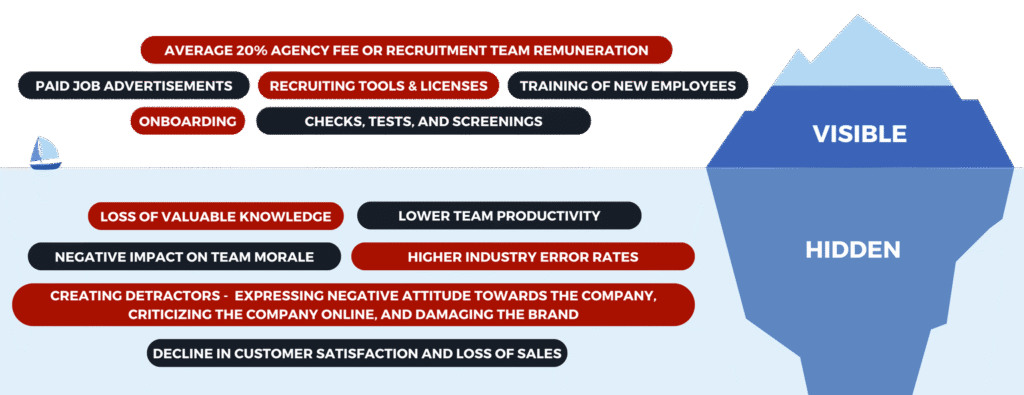
What’s worse, heavy financial losses are not the only ones that will incur…
Talent Sourcer's
Job

As a Talent Sourcer, I bring a unique value with my monthly “Open-To-Work” reports to clients, informing them how many people in which positions are planning to leave. This helps to recognize the areas that need to be looked into, to prevent great talent from leaving.
You don’t need to pay for any agency or deal with any issues or losses coming from an employee leaving if you manage to keep them in your company in the first place.
Prevention before the cure.
If that doesn’t work out – Talent Sourcer’s main job is to find the best talent as quickly and cheaply as possible, keep pipelines full, and ensure you have strong candidates ready. No need to resort to desperation and pay high recruitment agency fees.
“By failing to prepare, you are preparing to fail.” – Benjamin Franklin